11/06/2026
Social Media vs Corporate Gifts 2026
Social Media Advertising: Taking Advantage of the New Age of Technology
The definition of social media, according to the American Psychological Association, refers to the many different forms of digital communication that allow users to share ideas, information, messages and other content through online communities. Social Media is a bridge that links people from all around the world through our everyday devices. Through the creation of these platforms, the world of traditional marketing and advertising has changed completely. No longer do businesses worry about buying ads on buses or billboards at strategic locations, instead they rely on creativity of their content and how many views each of their posts generate across all platforms. According to Forbes, there are three main uses for social media to organisations, which are:
- Building Brand Awareness and Reputation
- Engaging with Customers and Building Relationships
- Driving Traffic and Conversions
Now, when leveraging social media advertising, it’s not just simply taking a video of a product and uploading it. This method includes a lot of strategising when it comes to content, platform of choice and target audience for each individual ad. That begs the question: Are Social Media ads actually worth it? According to IAB UK’s Digital Adspend Study in 2025, the expenditure on Social Media advertising within the UK reached a total of £11.5 billion, which was a 21% increase from the previous year. Here’s a breakdown of the average cost per click of advertising on each digital platform in 2026:
While the average cost per click should be the only factor taken into account when budgeting for social media advertising, it gives a general overview of how the cost of this advertising method can build up. It’s important for brands to note the Cost Per Meaningful outcome (CPM) when choosing whether to use social media advertising. The total cost of UK businesses investing into social media ads can range anywhere from £2,000 to £10,000 each month, depending on the size of the organisation and their intended objectives.
Besides the cost of the ads itself, another aspect that should be taken into consideration is the Return On Investment (ROI) that each advertisement brings towards the business. When talking about Social Media, the term “ROI” doesn’t always mean the same thing for every brand. In order for an organisation to see a good ROI for the advertisement they must have a clear goal in mind, which could range from increased brand awareness to a rise in sales of a targeted product. According to We Do Marketing, in order for a business to accurately measure their ROI, they must have all the inputs tracked and outputs measured.
For example, a tech company in the UK ran an online campaign in 2026 with the following data:
- Ad Spend: £10,000
- Management & Creative Costs: £2,000
Total Expenditure/Investment on Campaign = £12,000
- - Total Leads Generated: 100
- - Conversion Rate: 5% (5 out of the 100 became paying customers)
- - Customer Life Time Value: £5,000 (profit per customer)
Total Revenue = 5 customers x £5,000
= £25,000
= £25,000 - £12,000 (total investment)
= £13,000
Return On Investment = £13,000/£12,000 x 100
Final result = 108.3%
For Social Media Advertising, there are also other metrics in relation to efficiency that should be observed beyond just the ROI percentage, this includes the Cost Per Acquisition (CPA) and Return on Ad Spend (ROAS). Both of these metrics need to be taken into account when determining if the ROI is truly “healthy”.
Benefits & Drawbacks of Social Media Advertising
With the assistance of Adobe for Business, here are the Top 5 benefits of Social Media Advertising in 2026:
- Engage with the Audience - Through platforms like Instagram, Facebook and Tiktok, brands are able to respond directly to customers' comments regarding their product. This allows businesses to gauge the perspectives of their consumers and immediately improve any faults.
- Boost Website Traffic - Every story, reel or post can be linked with a brand’s online website to funnel sales from social media. When interested with the content, the user often will want to see or learn more about the product or business.
- Retarget Missed Customers - With online retail merchants, it’s a common occurrence for a customer to visit your website and add a product to their cart. However, a lot of the time they don’t end up buying it. Social media ads help keep your brand on their mind and bring them back to that cart they have left behind.


On the other hand, Zoe Marketing and Communications outlines a few issues businesses face when relying on Social Media Advertising, which are:
- Shifting Algorithms Can Lead to the Opposite Effect - For many platforms like TikTok, the algorithms for videos are constantly changing. This can cause certain ads to reach fewer consumers than what was expected.
- Takes Time and Resources - Each platform differs on their audiences, which leads brands to have to come up with a large variety of creative content focused for each platform. For example, not every post that would do well on Facebook would be able to be reused for Tiktok and vice versa.
- Ads Have Limited Results - As Social Media is made for users to be continuously scrolling, constantly going through post by post, the stop and take action process is more unlikely to be enacted. Thus, leading these ads to have a lower ROI than others.
Advertising Gifts: A Meaningful and Lasting Approach to Marketing
Advertising Gifts (AKA Promotional Products) refers to items that have been branded with a company’s logo or slogan that are given out to their target audience without any charge. In every sense of the word, they are in fact a gift. However, through the methods of human psychology, they most commonly come with an underlying intent. According to Forbes, the goals of each promotional product are:
- Position the brand in higher regards compared to their competitors by inspiring people to take action.
- Assist in enhancing brand recall to increase the likelihood of repeated business in the future.
According to CEO Monthly, studies have actually proven that 66% of individuals who received a promotional product were able to recall the name of the brand up to 1 year after receiving the advertising gift. This particular statistic highlights the effectiveness when it comes to corporate gifting. When referring to promotional products, they can come in many sizes, shapes and forms, from the traditional custom printed flash drives and branded stationery to out of the box promotional plant starter kits and personalised power banks, the possibilities with these advertising gifts are limited to a brands’ creativity. Promotional products are commonly used to invoke a positive emotion within the recipient, which usually leads to them drawing positive associations with the brand itself. With these gifts, the goal is for the impact on the potential consumer to outweigh the monetary value. This allows brands to pick products that are within their budget that will still grant them the possibility of a high Return On Investment (ROI) when implemented correctly.
During times of economic hardships, advertising gifts can be used as an excellent strategy in gaining customer loyalty and building a strong brand reputation. A survey conducted by Promotional Products Association International found that 59% of the individuals that participated in the survey said that they would much more appreciate a useful corporate gift rather than watch ads on social media or on other channels. Beyond the customer, these promotional products have proven to boost employee morale and improve overall productivity. According to Sales and Marketing Management, 85% of employees said that corporate gifting would influence them to recommend their employer to outside individuals due to the recognition received for their work. This goes to show that regardless of whether it’s in an office setting or to customers, advertisement gifts can be an investment worthwhile when used effectively.
Let’s take a closer look at the ROI of promotional products. When it comes to these physical products, the calculation will differ from online ads. This is because rather than having a cost for every click on the ad, the gift is a one time investment that continues to advertise once given to the target audience. Larger firms tend to look at the Lifetime Cost-Per-Impression (CPI), this includes an estimated number of impressions that are received by the product throughout it’s lifespan than divided by the initial cost of that product. For example:
- Cost of a branded eco-friendly pen (per unit) = £0.90
- Average Number of Lifetime Impressions = 1,500
Cost Per Impression = £0.0006
The act of gifting itself plays an important role and creating emotional bonds with the consumer. Moreover, many organisations now integrate QR codes into their corporate gifts that will lead the recipient to a page that promotes their ongoing campaign while simultaneously tracking conversions. Furthermore, the wide array of products that businesses can choose from ensures that brands can accurately display their identity, values and ideas which can communicate to the recipient their efforts on sustainability, diversity and contributions to the community and society.

Elegant push-up mechanism ball pen in natural bamboo wood body and shiny silver metallic finish accessories. Jumbo cartridge and blue ink.
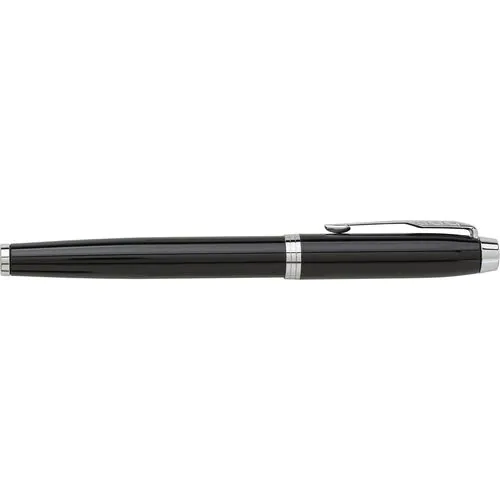

Lacquered brass Parker IM rollerball with click mechanism. Black ink. Pen pre-packaged in giftbox.


WoW! Bluetooth ABS speaker with a casing made from FSC 100% certified bamboo. The wireless 3W Bluetooth speaker (version 4.1) is rechargeable and has excellent sound reproduction. Power 300mAh/3.7V. Range up to 10 meters. Easy to operate and compatible with the most common smartphones and tablets. Includes a charging cable with USB-C connection and a user manual. Each item is supplied in an individual brown cardboard box.


Bambook Classic Hardcover erasable notebook in A5 format. With sturdy bamboo hardcover and 20 sheets/40 pages of erasable, lined paper. Write with the special marker on the whiteboard pages, scan your notes with the Bambook app and wipe your pages clean for reuse with a damp cloth. With wire-o binding, pen loop and elastic closure. Includes pen with eraser. The notebook is handmade. Made in Holland.


Bring the party anywhere with the JBL PartyBox Encore! Enjoy 10 hours of non-stop music with powerful JBL Original Pro Sound and deep bass. The wireless microphone with adjustable echo, bass, and treble makes it perfect for karaoke nights. A dynamic light show featuring strobe, ring, and club lighting creates the ultimate party atmosphere. With wireless Bluetooth connectivity and the PartyBox app, you can easily customise your music and lights. The IPX4 splash-proof design and convenient carry handle make this speaker ideal for any indoor or outdoor party. Order now with a stylish black cover, fully customisable with your logo and branding, for a unique and professional look.


The beat goes on with the new JBL Flip 6. The 2-way speaker system provides loud, crystal-clear and powerful sound. With its optimised dual passive radiators, the Flip 6 has deep bass.
The Advantages & Disadvantages of Incorporating Promotional Products Into A Brand’s Marketing Strategy
Advantages | Disadvantages |
Corporate Gifts help encourage customer referrals which research has shown that referred customers are 200% more likely to spend than customers acquired elsewhere. | Can inquire cost for storage space and inventory management when purchased in very large quantities. |
Promotional Products helps boost brand recall through repeated exposure to a business’s logo | When sourced from an untrustworthy supplier, the poor quality of products can reflect on one's own brand image. |
Advertising Gifts not only targets potential customers but also can be used for employees and business partners, strengthening many types of relationships. | Products that are chosen incorrectly and have low practicality can often be discarded leading to waste of money and resources. |
In conclusion, both social media advertising and promotional products come with their own strengths and weaknesses. When determining which option would be better suited for a certain brand, only one question must be answered: What does this marketing approach aim to achieve? If a firm is looking for brand awareness and reaching a larger audience then social media advertising may be more beneficial. However, if the target is to ensure that customers repeat business transactions and remember the brand, then advertising gifts is the way to go. Only one thing has to be kept in mind: social media helps businesses find and acquire new customers, whereas advertising gifts ensure those customers stay with the brand for the long run.