







Safety Promotional Products
Why Branded Safety Gear is the Ultimate High-Retention Asset
In the saturated world of branded merchandise, most items compete for space on a desk. Branded safety products do something far more valuable: they earn a place in the field. Unlike ephemeral giveaways, safety-critical equipment is designed to perform under pressure. This functional necessity makes it one of the most potent, yet overlooked, categories for building long-term brand equity.
In sectors like construction, logistics, and engineering, safety is not an "extra" — it is a non-negotiable standard. When a brand provides high-value products, it moves beyond simple advertising. It becomes a partner in the user's physical well-being. By branding these essentials, an organisation signals a commitment to responsibility. A logo on a high-visibility vest or a pair of certified safety boots isn't just a mark of ownership; it’s a badge of reliability that is integrated into the wearer’s daily professional ritual.
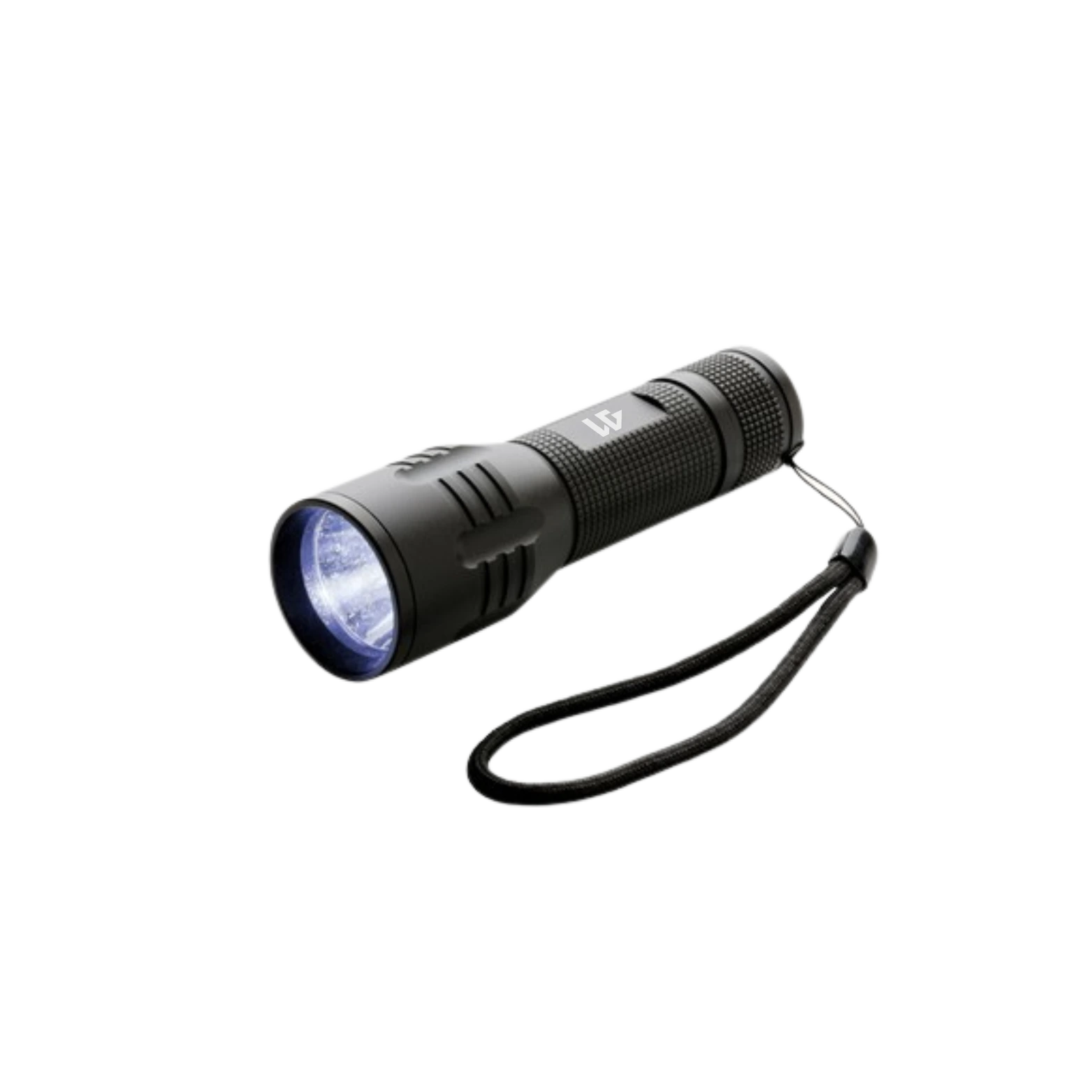
The true strength of the safety category lies in its tactical utility. Consider the flashlight — or more accurately, the high-performance LED torch. In a professional context, a torch is not a novelty; it is a tool for inspection, a safeguard during power failures, and a critical component of vehicle emergency kits. Every time that beam is clicked on in a dark warehouse or during a roadside recovery, the brand is associated with clarity and problem-solving.
For UK-based organisations in manufacturing, public services, and infrastructure, selecting the right safety gear is a reflection of corporate values. Whether it’s an arc-rated garment for an engineer or a shock-resistant torch for a site manager, these products represent a brand that values performance over posture.
High-Field Retention: Unlike standard office merchandise, branded safety equipment earns a permanent place in daily workflows, linking your logo directly with reliability, protection, and operational trust.
Read about tactical utility and corporate responsibility
A Badge of Reliability: In high-stakes fields like construction and engineering, certified protective gear like hi-vis vests or tactical LED torches transform promotional items into essential professional tools.
Problem-Solving Equity: Utilizing critical equipment ensures your brand is present in moments of focus, emergency, or inspection, shifting your marketing from passive exposure to active reassurance.
Choosing rugged, high-spec safety apparel and gear reflects solid corporate values, communicating a genuine commitment to the physical well-being of teams and partners in infrastructure sectors.

Gloves PIONER
Mechanical Risk Protective Gloves.Made from different materials: leather, polyurethane, polyamide and elastane outer fabrics and high-performance polyethylene (HHPE) inner fabric.Garment certified as a Category II PPE based on EN ISO 21420:2020 and EN 388 standards about Mechanical Risk Protection (X,X,X,X), abrasion, cutting, tearing and puncture. Elasticated waist with an opening that makes it easy to put on.Palm neoprene reinforcement, stretchy dorsum, plastic rings and a clip to connect the gloves to each other.Ideal for hand protection against risks mentioned before.
How Safety Products Deliver More Than Visibility
Most promotional merchandise is evaluated based on how often it is seen. Safety products operate on a different level entirely, because they are not just visible — they are relied upon. These products are integrated into structured environments where usage is consistent and often required. This creates a more meaningful form of engagement, one that is built on dependability rather than novelty.
Instead of generating a single impression, safety promotional products create repeated interactions through use. Each time the product is worn, handled, or relied upon, it reinforces the same underlying message: the brand is present in environments where safety and responsibility matter.
This is particularly relevant in industries where trust is critical. When a product contributes, even indirectly, to protection or risk reduction, it carries more weight than traditional promotional items. In these contexts, the brand is not just associated with visibility — it is associated with reliability.
Safety merchandise goes beyond simple visibility. Because these products are strictly relied upon in regulated work environments, they build deep brand engagement centered on trust.
Learn about repeated interactions and brand trust
Every time protective gear is handled or worn, it delivers a clear message: your company is actively present where physical responsibility and high operational standards matter most.
The Trust Factor: Supporting risk reduction allows your logo to carry far more professional weight than standard giveaways, linking your brand with pure reliability.

The Increasing Growth of Safety Culture
Historically, safety products have been viewed primarily through the lens of compliance. They were items required to meet regulations, rather than opportunities to reinforce broader organisational values. That perspective is changing.
Increasingly, organisations are recognising that safety products can play a role beyond compliance. They can support and strengthen a wider safety culture — one that is visible, consistent, and embedded across teams. This shift transforms the role of the product. Instead of being a requirement that sits in the background, it becomes a visible part of how safety is communicated and reinforced on a daily basis.
Branded safety products are now being used to support internal initiatives, reinforce behavioural standards, and create alignment across workforces. When applied thoughtfully, they contribute to a shared understanding of expectations — not through messaging alone, but through consistent presence.
There is also a growing recognition that safety culture does not begin in the workplace — it starts much earlier. Increasingly, organisations and public-facing campaigns are looking at how safety behaviours can be introduced at a younger age, building awareness before individuals enter professional environments.
Products such as child-focused safety items — including toy construction helmets designed for kids — play an important role in this shift. While simple in form, they introduce the idea that safety is not optional, but instinctive. By engaging younger audiences through familiar, accessible formats, organisations are able to reinforce foundational behaviours in a way that feels natural rather than instructional.
Safety gear has evolved from a simple regulatory requirement into a powerful tool for building a proactive, visible safety culture across teams and future generations.
Learn about workplace alignment and early-stage awareness
Beyond Compliance: Branded safety items support internal initiatives and reinforce behavioral standards, transforming required gear into a daily reminder of shared company values.
Early Safety Culture: Instilling safe habits starts early. Child-focused items, such as toy construction helmets, help public-facing campaigns make safety feel instinctive and natural rather than strictly instructional.

The Architecture of Utility
In the safety category, ROI isn't measured by a single impression, but by operational integration. While lifestyle merchandise relies on novelty to survive, safety products thrive because they are woven into the mandatory daily workflows of the UK’s most essential industries. Unlike a promotional t-shirt that may never leave the house, a branded hi-vis vest or waterproof parka delivers guaranteed daily frequency. The brand becomes the "uniform of the site," gaining thousands of passive impressions without the fatigue associated with traditional advertising.
Protective equipment such as gloves, boots, and eyewear occupies a unique psychological space. These items are the physical interface between the professional and their work. When a brand provides a high-spec, ergonomic safety glove or anti-mist eyewear, it is providing a performance enhancement. Because these items are used for extended shifts, the brand interaction is sustained and tactile. It shifts the perception of the brand from a mere "supplier" to a "protector," anchored in the routine of the professional’s day.
Portable safety kits and precision hardware operate on the principle of readiness. These products do not require daily use to be effective brand ambassadors; rather, their value is solidified in the "moment of need," creating a powerful psychological association with the provider.
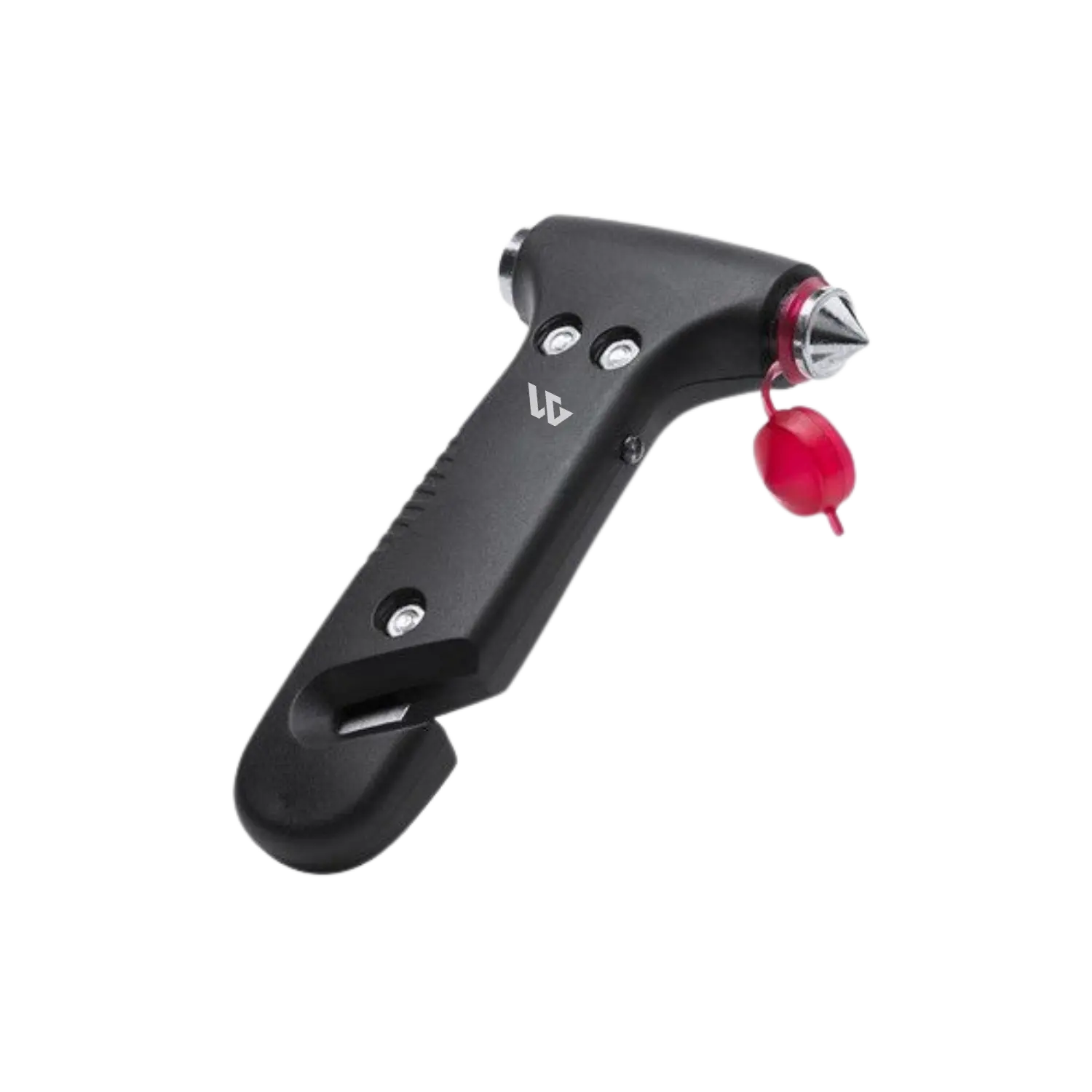
- Integrated Rescue Tools: An emergency window breaker or seatbelt cutter is a permanent fixture in a vehicle’s console or glove box. It is a "high-utility, low-frequency" item that represents the brand’s foresight. In a critical moment, these tools transform from a passive object into a life-saving essential, tethering the brand to a narrative of protection and reliability.
- Response Kits: Whether stored in a home, commercial fleet, or a site office, a well-stocked safety kit is a silent testament to a company’s values. Its presence alone reinforces a brand’s reputation for preparedness, ensuring that when the unexpected occurs, your organisation is the one providing the solution.
What distinguishes safety products from any other category is their connection to behaviour. These items are not tied to fleeting marketing campaigns; they are tied to ongoing, essential activity. By selecting high-performance safety gear, an organisation ensures its brand remains in operation long after traditional promotional items have been discarded. It isn’t just merchandise; it is a long-term investment in professional trust.
In high-stakes industries, safety ROI is driven by workplace utility. High-performance gear acts as a daily workplace uniform, generating thousands of passive impressions.
Explore tactile protection and emergency readiness
Tactile Interface: High-spec equipment like ergonomic gloves, certified boots, and anti-mist eyewear protect workers during long shifts, shifting your brand perception from supplier to trusted protector.
The Moment of Need: Certain high-utility assets build deep equity through constant readiness rather than daily usage:
- Rescue Tools: Vehicle window breakers and seatbelt cutters anchor your logo to foresight and lifesaving reliability.
- Response Kits: On-site and fleet first-aid kits serve as a silent testament to preparedness and safety culture.
By choosing performance-led safety equipment tied directly to essential activities, your business secures a long-term investment in professional trust.
Investing in Safety Products That Are Used, Not Avoided
In the safety category, design decisions directly influence whether a product is used as intended. Unlike other promotional products, where usage may be optional, safety items must function effectively under real conditions.
- Comfort is a key factor, particularly for wearable products. If an item restricts movement, feels heavy, or causes discomfort, it is less likely to be used consistently, even if it is required. Over time, this reduces both its practical value and its visibility as a branded item.
- Durability is equally important. Safety products are often used in demanding environments, and items that degrade quickly or fail under pressure can undermine trust. A product that does not perform reliably reflects not only on its functionality, but also on the brand associated with it.
- Ease of use and accessibility also play a significant role. Products that are difficult to locate, use, or maintain are less likely to be integrated into daily routines.
Branding, while still important, should support rather than interfere with function. In many cases, subtle branding that aligns naturally with the product performs better than highly visible logos that disrupt usability. When these elements are considered together, the product becomes part of the workflow — not an additional layer that needs to be managed.
Design decisions directly control safety gear compliance. Items must be functional, comfortable, and reliable under pressure to be integrated into daily workflows.
Explore core usability and design factors
- Comfort First: Heavy or restrictive wearable items are avoided by teams, reducing active brand exposure and safety compliance.
- Rugged Durability: Cheaply made products that degrade under harsh industrial use quickly undermine confidence in your corporate standards.
- Intelligent Accessibility: Clean, highly accessible gear layouts ensure immediate deployment within standard routines.
Subtle Integration: Corporate branding should remain sophisticated and understated. Non-intrusive logos maintain product performance, turning essential tools into natural extensions of the workspace.


Extra thin 15W charging base, in recycled aluminum, customizable with mirror logo.


Transparent 15W induction base in acrylic, customisable with an LED logo.


15W MagSafe charger in recycled aluminum, customizable with LED logo.


15W wireless charging base made with PU-leather and ABS with soft-touch finishing, and customizable with a ligthing logo.


15W wireless charging base made with ABS soft-touch and acrylic customizable with an offset ligthing logo. Thanks to the acrylic plate and the offset printing, this base offers a high-quality digital logo.


15W wireless charging base made with metal and acrylic customizable with an offset ligth-up logo. Thanks to the acrylic plate and the offset printing, this base offers a high-quality digital logo.


15W wireless charging base made with bamboo and acrylic customizable with an offset ligthing logo. Thanks to the acrylic plate and the offset printing, this base offers a high-quality digital logo.


Exclusive and transparent wireless charging base.
Maximising ROI through Lifecycle Value
From a commercial standpoint, branded safety products are frequently undervalued because they are viewed through the lens of siloed procurement — judged on unit cost rather than long-term yield. In a professional setting, the cheapest item is often the most expensive in the long run, both in terms of brand perception and replacement frequency.
Shifting from Unit Cost to Cost-Per-Use:
The true commercial metric for safety merchandise is its Lifetime Utility Value. While a standard promotional item might have a shelf-life of weeks, a high-spec safety asset — such as a technical jacket or certified eye protection — is retained for years. When a product is integrated into a daily professional kit, the cost-per-impression plummets. It isn't just a one-time giveaway; it is a recurring brand interaction that survives the rigours of the field, the wash cycle, and the changing seasons.
The Risk of Brand Dilution:
In the UK marketplace, where Health & Safety standards are rigorous, a safety product that fails in the field does more than just break — it creates a trust deficit. Choosing products that perform under real-world pressure, whether that’s a thermal layer or a heavy-duty multi-tool, positions your organisation as one that understands the practical realities of its industry.
Strategic Alignment: Purpose-Led Procurement:
The most effective commercial strategy is to move away from variety and toward utility. Instead of broad-spectrum gifting, organisations should identify the critical touchpoints in their workforce's or clients' daily lives:
- Workforce Alignment: Using high-tier safety gear to unify a team under a shared standard of excellence.
- Client Retention: Gifting a high-value safety asset that becomes a permanent fixture in their vehicle or site office.
- Operational Continuity: Ensuring that the brand is present exactly when and where the work is happening.
Ultimately, the commercial power of safety products lies in their permanence. By prioritising durability and real-world performance, brands move out of the disposable category and into the essential toolkit.
Evaluating safety gear by unit cost misses the long-term yield. Premium protective equipment cuts replacement costs and builds lasting professional trust.
Explore lifetime utility and strategic procurement
Cost-Per-Use: High-spec assets like technical apparel or heavy-duty multi-tools survive harsh seasons and industrial washing cycles, dropping your long-term cost-per-impression.
Avoiding Trust Deficits: In the highly regulated UK sector, product failures dilute brand authority. Reliable premium gear proves you understand operational realities.
Purpose-Led Procurement:
- Workforce: Unifies field teams under shared quality standards.
- Clients: Acts as a permanent fixture in site offices or company vehicles.
- Operations: Anchors your brand identity directly to live job sites.
Mapping Impact & Sector Synergy
The efficacy of a safety asset is rarely accidental; it is a byproduct of its environment. When a product is perfectly aligned with the specific pressures of an industry, it stops being "merchandise" and becomes a systemic component of the workspace. Understanding these environmental nuances is the key to moving beyond distribution and into true operational integration.
- Construction & Infrastructure: In the high-velocity environments of UK construction and civil engineering, safety gear is a visual language. High-visibility apparel and head protection are not just daily wear; they are anchors of site discipline.
The Impact: Because these items are mandatory from clock-in to clock-out, the brand becomes synonymous with the site itself. In this context, durability is the primary driver of brand equity—gear that survives the grit and weather of a British winter earns a level of respect that no standard promotional item can reach. - Logistics & Transportation: For the logistics and haulage sectors, the brand presence must be as mobile as the workforce. Portable safety kits and high-performance roadside emergency tools extend the brand’s reach far beyond a single location.
The Impact: As these items move across the motorway network and through distribution hubs, they act as mobile touchpoints. A branded trauma kit in a cab or a reflective load-strap isn't just functional; it’s a signifier of a fleet that values safety across every mile of the supply chain. - Manufacturing & Heavy Industry: Manufacturing environments are defined by structured processes and the "Golden Rules" of safety. Here, products like precision-grip gloves or ear protection serve to reinforce consistency and compliance.
The Impact: When safety gear is integrated into a lean manufacturing process, it becomes part of the "system of work." The brand is seen not as an intruder, but as a facilitator of the plant’s safety culture, helping to reduce downtime and maintain rigorous HSE standards. - Public Services & Healthcare: In public-facing roles and healthcare settings, safety gear—such as high-spec anti-microbial apparel or professional-grade torches for first responders—contributes to the perception of authority.
The Impact: In these sectors, the product acts as a badge of professionalism. It reinforces trust between the operative and the public. When the equipment looks and performs with precision, it validates the expertise of the wearer and the reliability of the organisation behind them.
Across all of these industries, the effectiveness of the product is shaped by its role within the environment. When aligned correctly, safety promotional products move beyond distribution and become part of the system they support.
The impact of safety merchandise depends on its environment. Aligning premium gear with specific industry challenges turns standard promotional items into vital operational assets.
Explore sector-specific impacts and synergies
Construction: Mandatory hi-vis wear and hard hats embed your logo into daily site discipline. Surviving rough British winters establishes deep trust and exceptional brand durability.
Logistics: Mobile tools like cab trauma kits or load straps transform standard haulage journeys into active motorway touchpoints, proving fleet safety across the entire supply chain.
Manufacturing: Integrating precision-grip gloves or ear protection into lean assembly systems simplifies plant compliance and directly helps maintain HSE standards.
Public Services: High-spec anti-microbial apparel and pro torches act as badges of visual authority, securing essential trust between field operatives and the general public.

Bolting On A More Comprehensive Safety System
In practice, safety products rarely sit neatly within a single category. They tend to accumulate over time — added to a van, a site office, a toolbox, or even a personal kit — until they form a working setup that reflects how the job is actually done.
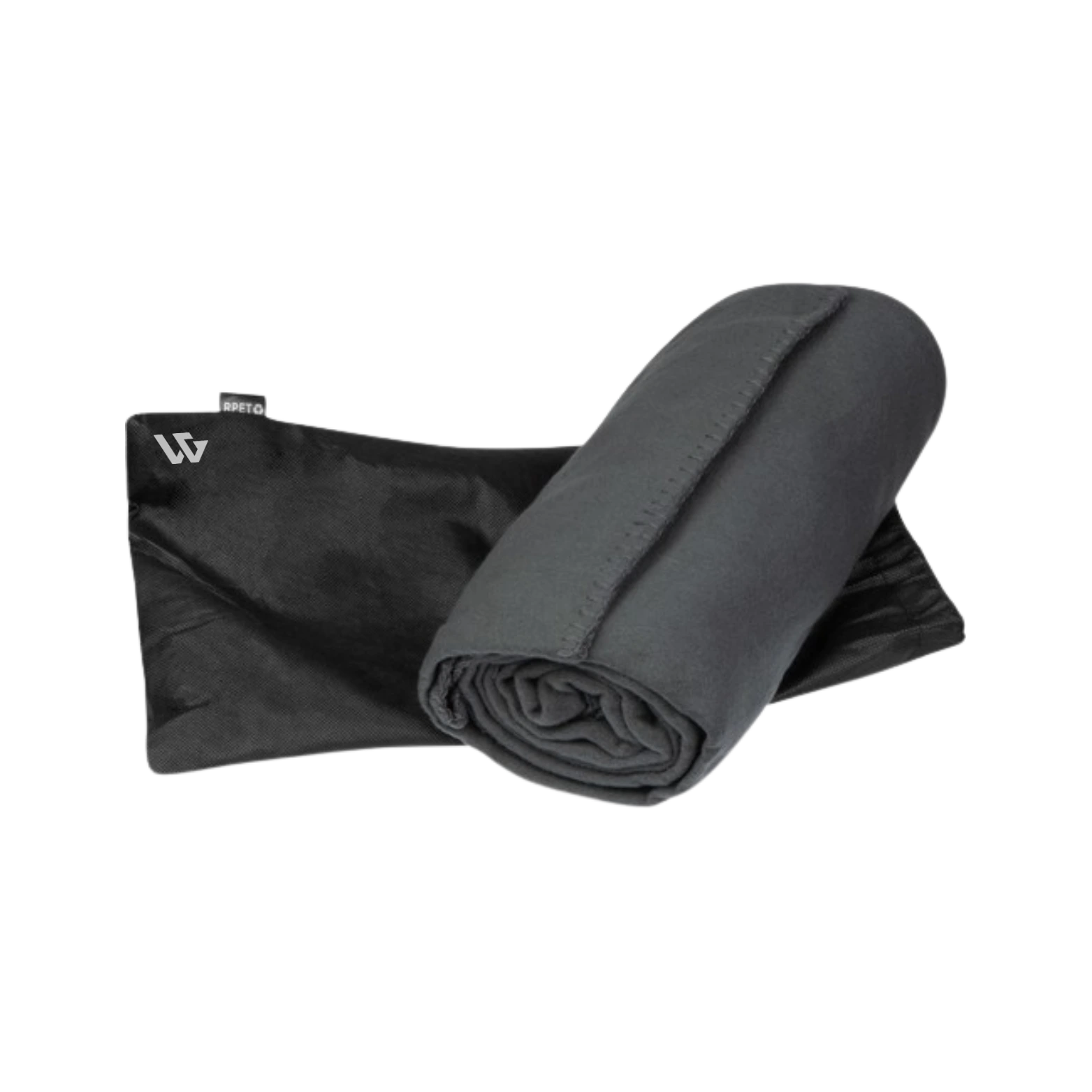
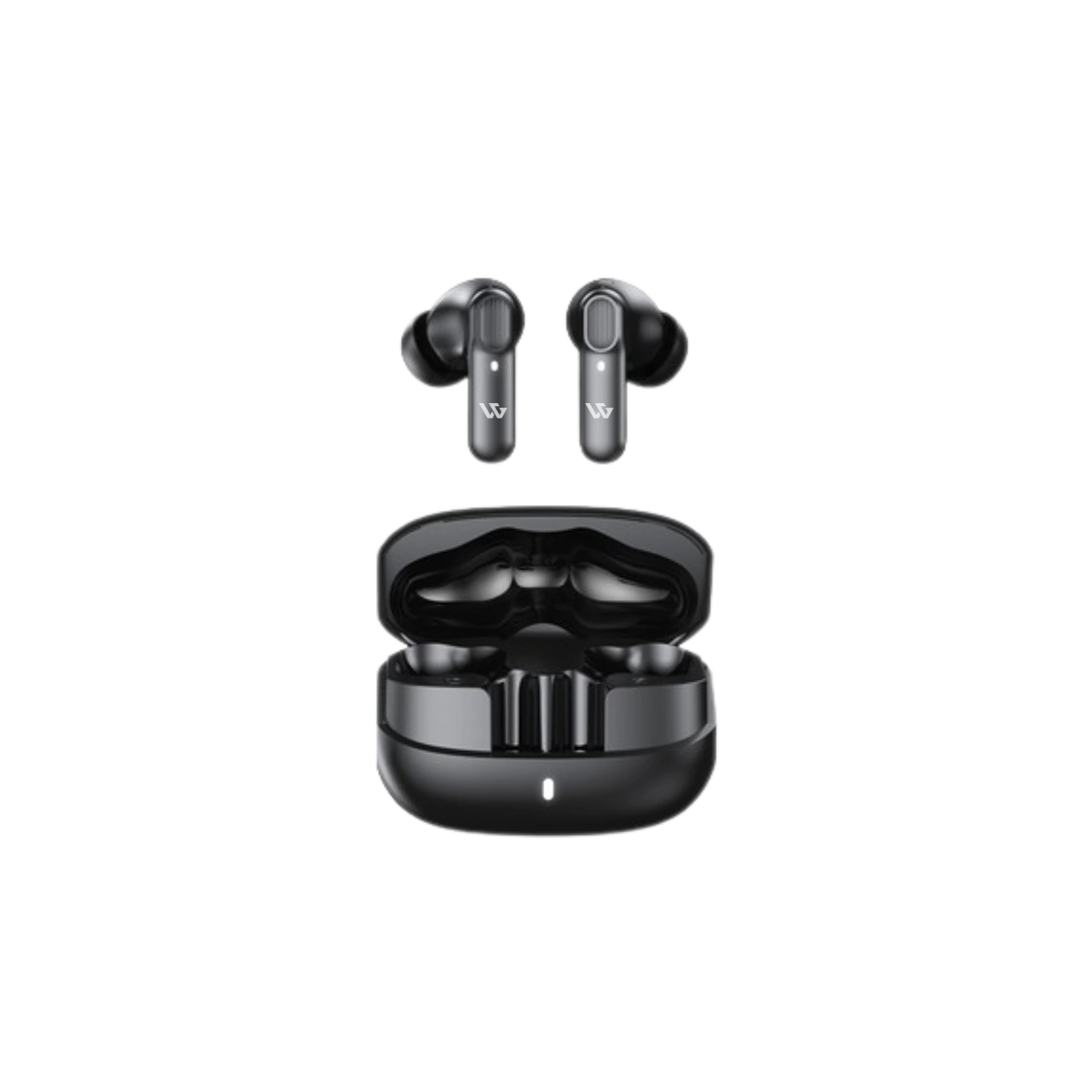
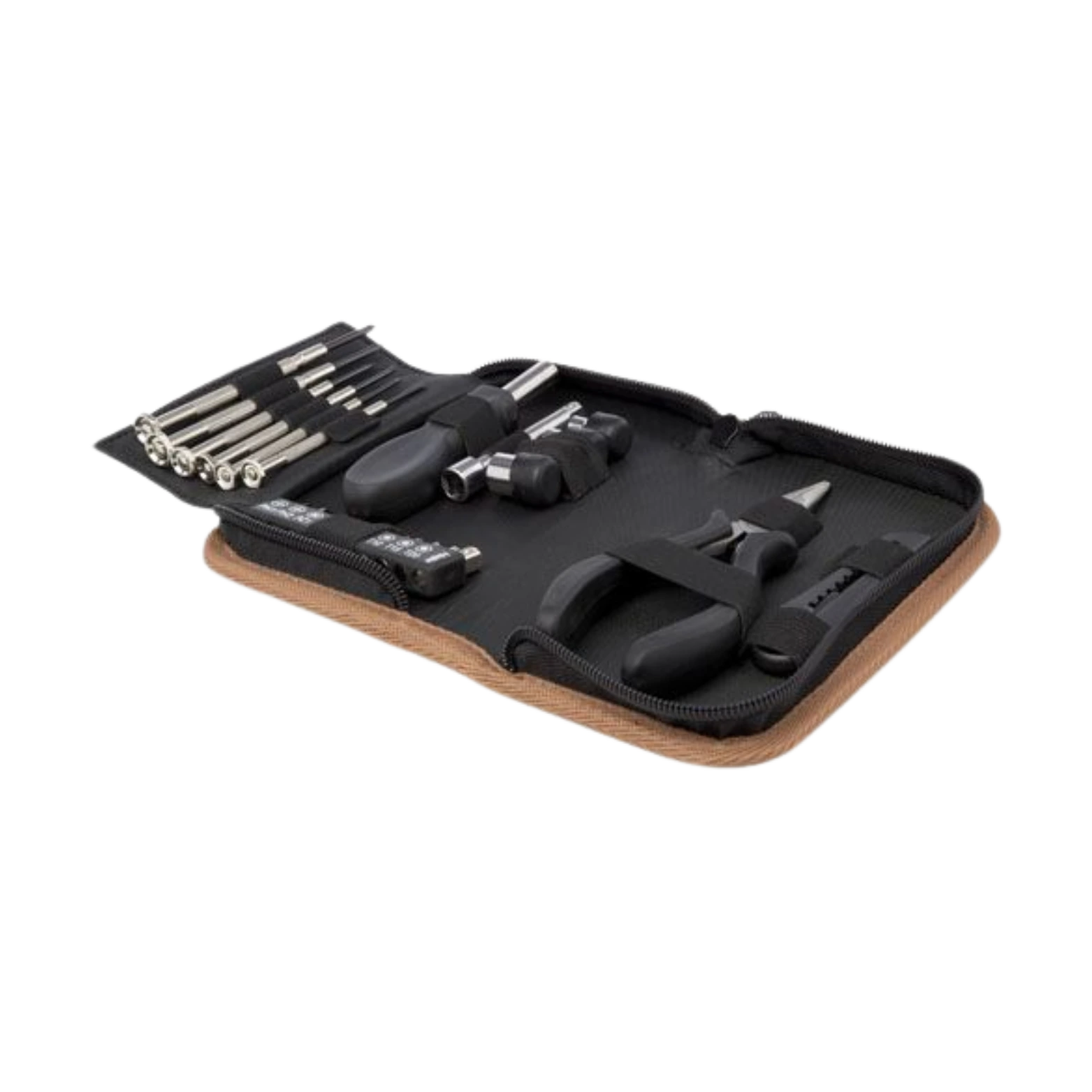
A high-visibility vest might be the starting point, but it is often used alongside worksite equipment, everyday tools, and smaller, practical items that are picked up just as frequently. A screwdriver in a toolbox, a compact piece of technology for communication, or even small leather goods used to organise essentials — these are the items that stay close at hand because they solve immediate problems.
What makes this effective from a branding perspective is not the individual product, but the overlap. When multiple items exist within the same working environment, the brand is encountered in different moments, for different reasons — not as a single gesture, but as something consistently present.
Safety equipment works best as an ecosystem. Over time, core protective gear blends with everyday tools to form a comprehensive, high-frequency setup for field operations.
Learn about ecosystem overlaps and daily presence
While a hi-vis vest offers immediate visibility, combining it with field hardware, tools, communication devices, or leather organizers embeds your brand deeper into standard routines.
The Overlap Strategy: Having multiple branded touchpoints inside a van or site office means users encounter your identity at different moments, turning single items into a narrative of constant support.
Werbegeschenk FAQ
Frequently Asked Questions
What mistakes do companies commonly make with safety promotional products?
A common mistake is focusing primarily on cost or availability without fully considering how the product will perform in real working conditions. Safety products that are uncomfortable, impractical, or poorly suited to their environment are less likely to be used consistently, which limits both their effectiveness and their intended purpose. Another frequent issue is selecting products without considering the specific context in which they will be used. Safety items need to align with actual workflows and environments. Without that alignment, they risk becoming underutilised or redundant.
How do I choose the right safety products for my business?
Apart from choosing a product that aligns with your brand values or campaign, the most effective approach is to start by understanding the environment in which the product will be used. Factors such as frequency of use, working conditions, and user requirements should guide the selection process. Products that integrate naturally into existing routines are more likely to be adopted and retained. This makes context more important than category when making decisions.
How do I balance compliance requirements with brand presence?
Balancing compliance and branding requires a careful approach, particularly in environments where safety standards are clearly defined. The primary function of the product must always come first. Safety products need to meet the necessary requirements for their intended use, and any branding applied should not interfere with visibility, usability, or regulatory compliance. Once those fundamentals are in place, branding can be introduced in a way that complements the product. This often means working within the natural design of the item — integrating logos into areas that do not affect function, or using subtle techniques that maintain clarity and professionalism.
Are safety promotional products suitable for external campaigns?
Safety promotional products can be highly effective in external campaigns, but only when there is a clear and logical connection between the product and the audience’s environment or behaviour. Unlike more general promotional items, safety products rely heavily on relevance. When distributed in the right context — such as industry events, public awareness campaigns, or environments where safety is a visible concern — they are more likely to be retained and used. In these cases, the product feels purposeful rather than promotional. However, in broader or less targeted campaigns, their impact can be limited. Without a clear use case, safety products risk being perceived as unnecessary or out of context. This makes audience alignment particularly important.
Can branded safety products contribute to a company’s ESG or Sustainability targets?
Absolutely. The most sustainable product is the one that doesn't need to be replaced every six months. By moving away from "disposable" promotional items and toward high-utility, long-lifecycle safety assets, organisations reduce their scope 3 emissions and physical waste. In the UK, procurement is increasingly focused on the "Circular Economy" — choosing a durable, branded rescue tool is a measurable win for your sustainability report.
Compliance & Procurement: Expert insights on integrating branded protective gear, avoiding common deployment mistakes, and maximizing long-term lifecycle value.
Read all FAQs on safety gear strategies and ESG impact
Common Mistakes: Procurement often prioritizes upfront cost over comfort and field context, resulting in restrictive or impractical gear that workers actively avoid.
Selection Metrics: Choose equipment based on environmental demands and workflow routine rather than catalog categories. High-retention gear must match real-world shifting conditions.
Branding vs. Compliance: Safety functions always dictate design. Logos should be subtly and professionally integrated into non-functional zones without disrupting HSE visibility standards.
External Campaigns: Safety merchandise succeeds in B2B or public awareness spaces when contextually aligned with audience behavior. Untargeted distribution leads to waste.
ESG & Sustainability: Shifting from cheap giveaways to heavy-duty, long-lifecycle rescue tools lowers physical waste and supports corporate scope 3 emissions metrics within the Circular Economy.