








Stationery Promotional Products
From Desk Item to Daily Essential: Why Stationery Works EverywhereIn an increasingly screen-heavy professional landscape, branded stationery has undergone a quiet revolution. No longer just a desktop staple, it has evolved into a high-status tool for cognitive focus and creative output. Unlike digital tools that compete for attention through notifications, stationery offers a tactile, friction-free environment for thinking. This inherent utility makes it one of the most resilient and high-retention categories in the UK promotional market. At the same time, stationery remains one of the most established and widely trusted forms of promotional gifting. Long before the rise of digital campaigns and experiential marketing, branded pens, notebooks and office tools were already being used as core advertising assets — and that relevance has never truly diminished.



Writing Set Bogotá
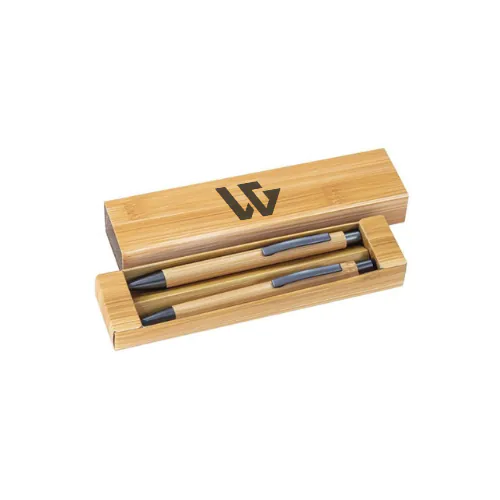
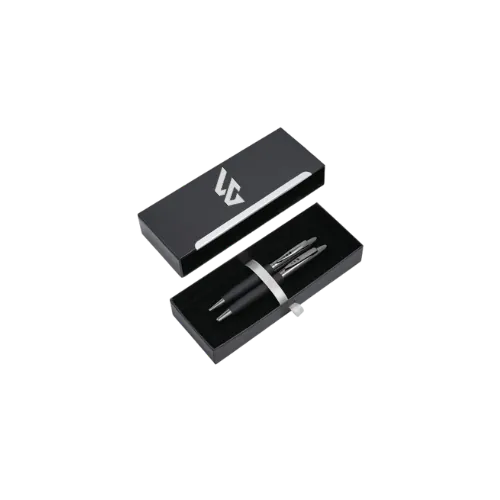
Writing set consisting of a blue-writing twist ballpoint pen, an inkless twist pen, and a cardboard box. Both pens are made from recycled ABS. Your logo is printed on both writing instruments.


Writing Set Bogotá
Writing set consisting of a blue-writing twist ballpoint pen, an inkless twist pen, and a cardboard box. Both pens are made from recycled ABS. Your logo is printed on both writing instruments.


Writing Set Bogotá
Writing set consisting of a blue-writing twist ballpoint pen, an inkless twist pen, and a cardboard box. Both pens are made from recycled ABS. Your logo is printed on both writing instruments.


Writing Set Bogotá
Writing set consisting of a blue-writing twist ballpoint pen, an inkless twist pen, and a cardboard box. Both pens are made from recycled ABS. Your logo is printed on both writing instruments.
Today, they continue to be a mainstay across industries where credibility, consistency and daily visibility matter. Marketing departments within banks, insurance companies, public institutions and investment firms have relied on stationery for decades — not because it is traditional, but because it works. These are environments where brand presence needs to feel steady, professional and integrated into everyday operations rather than disruptive. The power of custom notebooks, premium pens, and desktop organisers lies in their "default" status. They do not require an invitation to be used; they are the immediate, instinctive response to a new idea, a meeting note, or a daily plan. For a brand, this means moving from the periphery of a consumer’s life directly into their "flow state." When an organisation provides a high-spec, lay-flat notebook or a balanced, ergonomic pen, they are not just giving a gift—they are facilitating the user’s best work. For sectors spanning from creative agencies and financial services to education and tech, stationery promotional products offer a unique "desk-share." By occupying the physical space where decisions are made, these items deliver consistent, low-fatigue brand exposure. In a world of fleeting digital impressions, the permanence of a well-crafted planner or a signature writing instrument provides a tangible anchor for brand loyalty.
The Real Influence of Branded Stationery
The effectiveness of promotional stationery sets UK businesses use today is rooted in the "Tactile Effect." Writing by hand is proven to increase memory retention and neurological engagement. When your logo is on the pen or the page, your brand becomes physically synonymous with the user’s "Aha!" moments. Over time, this repeated proximity to creative and strategic thought creates a subtle but undeniable association. Your brand isn't just "seen"—it becomes a familiar, trusted companion during moments of intent and meaning. In a world of temporary screen-time, premium branded notebooks and writing instruments offer a permanent, high-utility anchor in the daily professional ritual.
From a commercial perspective, stationery delivers a "cost-per-impression" that is virtually unmatched. Because a branded desk diary or high-quality journal is kept for months—or even years—the brand exposure compounds daily. Unlike "throwaway" items, stationery is a high-retention asset that people are reluctant to part with. Whether used for corporate gifting, employee onboarding, or as a high-spec event giveaway, stationery turns the act of thinking into a measurable branding opportunity. When you provide the tools for someone to organize their world, your brand becomes a permanent part of their success.
Why Physical Stationery Still Drives Focus in a Digital World
In an age defined by speed, the act of writing by hand feels almost countercultural. And yet, its resurgence is not accidental — it reflects a deeper shift in how people are choosing to engage with information.
Digital tools are efficient, but they are also layered with distraction. Notifications, tabs, alerts — they fragment attention. Physical stationery, by contrast, offers a singular experience. It creates a boundary, a space where thinking can happen without interruption.
There is also a cognitive dimension to consider. Writing by hand has been shown to improve retention, comprehension and clarity. It forces a level of processing that typing often bypasses. This is why notebooks remain relevant, not as nostalgic objects, but as functional tools for better thinking.
In professional environments, this manifests in subtle ways. Notes taken by hand are often more intentional. Plans written down tend to feel more concrete. Ideas that pass through paper seem to carry more weight.
For brands, aligning with this behaviour places them in a different category altogether. They are no longer associated with speed or convenience, but with clarity and focus — qualities that are increasingly valued in a distracted world.
Products That Stay in Constant Use
The most effective stationery products are not the most innovative — they are the most dependable. A well-designed notebook does not need to be explained. It is opened instinctively, used without hesitation and returned to repeatedly. Its value is not in its novelty, but in its consistency. The same applies to pens — objects so integrated into daily behaviour that their presence often goes unnoticed, even as they are used dozens of times a day.
This constant use creates a rhythm. The product becomes part of a cycle — picked up, used, set aside, and picked up again. Over time, this repetition builds familiarity, not through deliberate attention, but through continuous interaction.
There is also a quiet hierarchy within the category. Everyday items deliver frequency, while more considered pieces — a refined notebook, a well-balanced pen — shape perception. Together, they create a layered experience that moves between utility and impression. What makes stationery powerful is not just that it is used, but that it is used without interruption. It does not compete for attention; it exists within it.


Extra thin 15W charging base, in recycled aluminum, customizable with mirror logo.


Transparent 15W induction base in acrylic, customisable with an LED logo.


15W MagSafe charger in recycled aluminum, customizable with LED logo.


15W wireless charging base made with PU-leather and ABS with soft-touch finishing, and customizable with a ligthing logo.


15W wireless charging base made with ABS soft-touch and acrylic customizable with an offset ligthing logo. Thanks to the acrylic plate and the offset printing, this base offers a high-quality digital logo.


15W wireless charging base made with metal and acrylic customizable with an offset ligth-up logo. Thanks to the acrylic plate and the offset printing, this base offers a high-quality digital logo.


15W wireless charging base made with bamboo and acrylic customizable with an offset ligthing logo. Thanks to the acrylic plate and the offset printing, this base offers a high-quality digital logo.


Exclusive and transparent wireless charging base.
Matching Product to Real-World Use
The challenge with stationery is not availability, but selection. The category is broad, and without a clear framework, it is easy to default to generic choices.
- Where will the product be used?
- Who will use it, and how often?
- What role will it play in their routine?
A notebook designed for a conference audience serves a different purpose from one intended for long-term planning. A pen distributed at scale carries a different expectation from a writing instrument given as a considered gift.
Understanding these nuances allows brands to move from selection to strategy. It also ensures that the product aligns with both environment and behaviour. When stationery fits naturally into a workflow, it is not just kept — it is relied upon.
Beyond Distribution: How to Maximise Impact with the Right Stationery Strategy
Distribution is only the starting point. The real impact of stationery is shaped by how it is introduced and how it is positioned. There is a growing shift towards more considered approaches. Rather than distributing single items in isolation, brands are beginning to think in terms of sets, moments and context.
A notebook paired with a pen becomes a complete tool. A planner introduced at the start of a programme becomes part of a journey. Timing is equally important. Products introduced at the beginning of a process — onboarding, training, events — are more likely to be integrated into routine. This increases both usage and retention.
Branding, too, benefits from restraint. Stationery is often used in environments where subtlety is valued. A well-placed logo can enhance the product; an overbearing one can limit its use. Ultimately, maximising impact is about coherence. When product, timing and design align, the stationery becomes part of a larger experience.
Embedding Your Brand into Moments That Matter
At its core, stationery exists at the intersection of thought and action. It is used when ideas are captured, refined and translated into decisions. These moments may seem small in isolation, but collectively, they shape how work is done and how outcomes are achieved.
Over time, the product becomes part of this process. It is no longer associated with when it was received, but with how it is used repeatedly. The brand moves from being an external presence to an embedded one.
This is where stationery reveals its true strength. It does not rely on visibility alone. It operates within moments that carry meaning — moments of clarity, planning and progress. And in those moments, the brand is not just present. It is part of the work itself.
The Right Moment for Stationery: When This Category Outperforms Others
Stationery does not always command attention, but in the right moments, it delivers exceptional performance. It thrives in environments where thinking, learning and communication are central — where the act of writing is not incidental, but necessary.
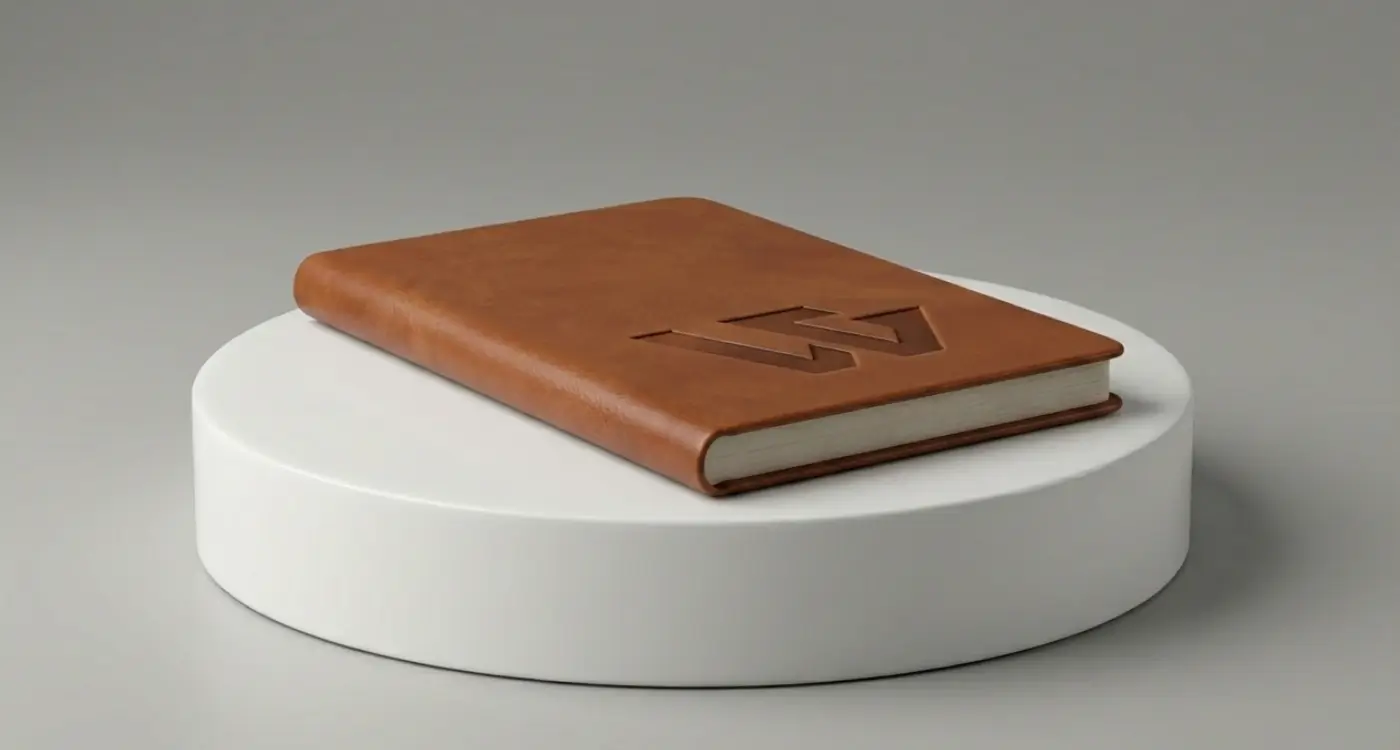
Conferences and forums are a natural example. A well-designed notebook placed at the start of a session is rarely ignored; it is opened almost immediately. As speakers present ideas and discussions unfold, attendees begin to capture key points, reflections and follow-up actions. In this context, the notebook becomes part of the experience itself. It moves with the attendee from session to session, carrying both content and brand presence. The effectiveness lies in immediacy — the product is used at the exact moment it is received, creating instant relevance and continued use beyond the event.
In corporate environments, the role of stationery shifts from momentary use to ongoing structure. A planner introduced at the start of a quarter, for example, becomes a tool for organising priorities, tracking progress and managing time. Similarly, notebooks used in recurring meetings begin to hold accumulated thinking — ideas, decisions and notes that build over weeks or months. This creates a longer-term interaction, where the product is not just used, but revisited. The brand becomes associated with continuity and organisation, rather than a single point of contact.
Educational settings offer another layer of engagement, where stationery becomes part of the learning process itself. Exercise books, revision planners or branded notebooks are used daily, often across multiple subjects or activities. The frequency of use is significantly higher, and the interaction is more sustained. In these environments, the product supports not just note-taking, but comprehension and retention. The brand, by extension, is present throughout that process — embedded within the act of learning rather than sitting outside of it.
There are also more subtle applications that are often overlooked. In onboarding programmes, for instance, a well-considered stationery set can shape first impressions. A notebook and pen given on day one are not just functional — they signal structure, preparedness and attention to detail. Similarly, in workshops or training sessions, providing stationery shifts participants from passive listeners to active contributors, increasing both engagement and retention.
What defines all of these scenarios is not scale, but alignment. The product works because it fits seamlessly into what people are already doing. It does not introduce a new behaviour — it supports an existing one. And when a product becomes part of the activity itself, it stops being optional.

Stationery Promotional Products

Frequently Asked Questions
The assumption is that digital tools replace physical ones. In reality, they serve different purposes. Digital platforms are designed for speed, storage and collaboration. Stationery, on the other hand, supports clarity, focus and individual thinking. It creates a slower, more deliberate space where ideas can be explored without interruption. This distinction is becoming more important as digital fatigue grows. Many professionals now use a combination of both — digital for execution, physical for thinking. Stationery fits into this balance naturally, not as a replacement, but as a complement. Its relevance is not driven by nostalgia, but by function. It remains valuable because it supports a type of engagement that digital tools often struggle to replicate.
The difference is rarely in the category — it is in the level of consideration. Generic stationery is often selected quickly, with little thought given to how it will be used. It may serve a purpose in the short term, but it rarely becomes part of a routine. Effective stationery, by contrast, feels intentional. It is chosen based on context, designed with usability in mind and aligned with the environment in which it will be used. The product feels appropriate, rather than convenient. There is also a subtle shift in perception. When stationery feels well-considered, it reflects positively on the brand behind it. It suggests attention to detail, an understanding of the user and a level of care that extends beyond the product itself.
Stationery operates in environments where subtle signals matter. A well-designed notebook or a refined writing instrument does more than serve a function — it contributes to how a brand is perceived. In meetings, workshops or client interactions, these items become part of the visual and tactile experience. Unlike more overt promotional products, stationery communicates quietly. It suggests organisation, professionalism and consistency without needing to state it directly. This is particularly important in sectors where credibility and attention to detail are valued. The right product does not need to stand out — it needs to feel right within the setting.
Yes — but the nature of the impact is different. In large-scale campaigns, stationery does not rely on immediate attention or novelty. Instead, it delivers value over time. Each individual interaction may feel small, but collectively they create sustained exposure. The key is distribution context. When stationery is introduced in environments where it will be used — events, training sessions, educational settings — its impact compounds. It moves from being a one-time item to something that continues to circulate. Scale amplifies reach, but relevance determines retention. When both are aligned, stationery performs exceptionally well, even at volume.
Stationery is most effective when it is part of a larger narrative. Rather than being distributed in isolation, it can be introduced as part of a sequence — onboarding, training, events or ongoing engagement. In these contexts, it becomes a tool that supports a process, rather than a standalone item. This integration increases both perceived value and actual usage. The product is no longer seen as something separate, but as something that belongs within the experience. Over time, this creates continuity. The brand is not just encountered once, but carried forward through repeated interaction.